
Should You Repair, Overlay or Replace Your Asphalt Parking Lot?
Updated: Oct 16
Choose the work that matches the damage, not just the finish you want to see.
The Short Answer Depends on What Is Still Working
Repair is often appropriate for isolated damage. An overlay may renew a larger surface when the pavement underneath remains usable. Replacement becomes more relevant when failure is extensive or the underlying problems cannot be addressed while keeping the existing asphalt.
A lot can need more than one of these approaches. The customer entrance may require rebuilding while the back parking rows remain candidates for maintenance.
Repair for Localized Damage
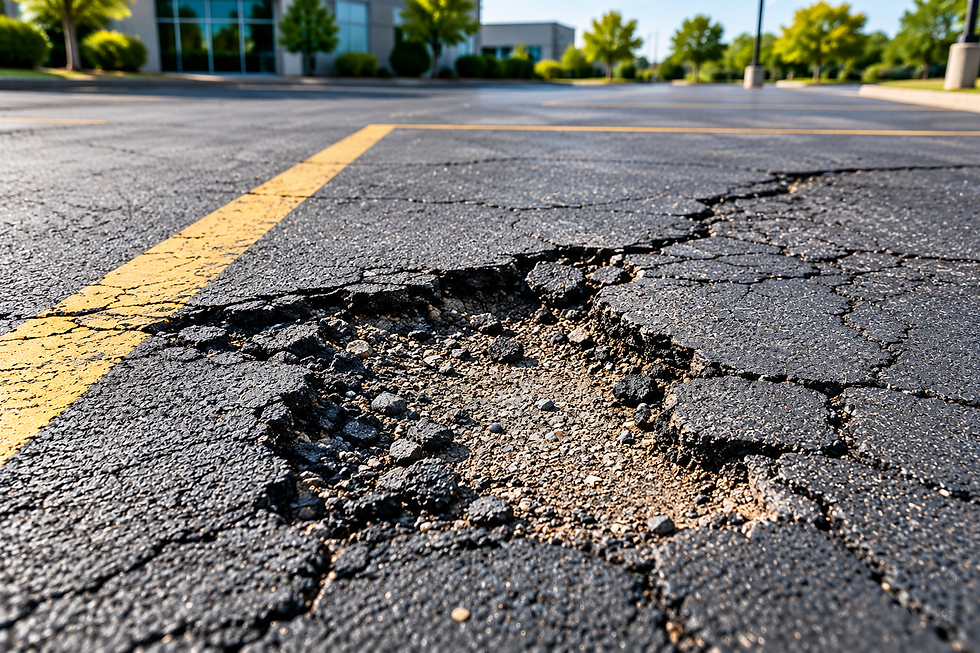
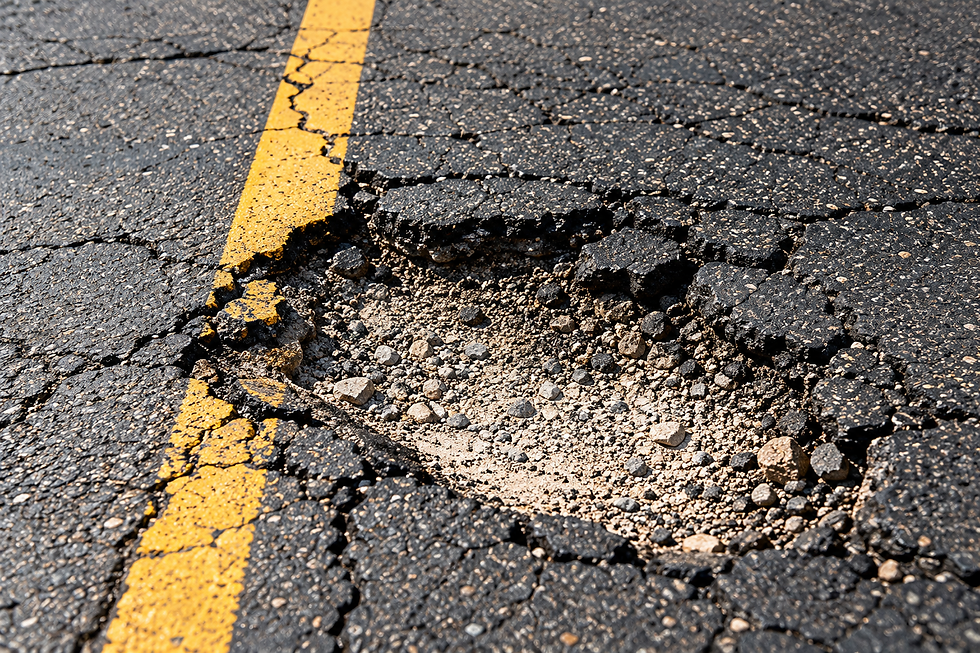
Asphalt repairs address potholes, broken sections and other defined areas. The boundaries should include the failed pavement, not simply the most visible opening.
Repair is worth discussing when the surrounding pavement still performs well. It allows the problem area to be treated without paying to replace the entire lot.
For example, one settled area beside otherwise intact parking rows may need removal and rebuilding. Coating the whole lot would not solve that depression, while full replacement could be unnecessary.
Overlay for a Surface That Can Support a New Layer
An overlay places new asphalt over existing pavement. It can renew the driving surface while keeping usable material beneath it.
Before choosing it, the contractor needs to evaluate failed areas, drainage and finished elevations. Curbs, entrances and adjacent surfaces may require milling so the new layer does not create awkward heights.
An overlay is not a way to make structural problems disappear. Existing movement and untreated failures can affect the new surface.
Replacement for More Extensive Failure
Removal and replacement gives access to the material below the asphalt. That can be necessary when deterioration or unstable support makes another surface layer a poor choice.
Replacement also creates an opportunity to address the shape of the area and connections to surrounding pavement. The extent of base work should be stated in the proposal.
A lot with repeated patches, widespread broken pavement and continuing movement deserves this broader discussion. The conclusion should come from the condition, not age alone.
Three Practical Comparisons
What you see | Option to investigate | Question that matters |
One failed section with intact pavement nearby | Localized repair | How far does the failure extend? |
Broad surface wear with usable support | Repairs followed by an overlay | Can the old pavement and elevations accommodate it? |
Widespread breakup or recurring structural problems | Removal and replacement | What must be corrected below the new asphalt? |
These are starting points for evaluation, not a diagnosis from appearance alone.
Keep Maintenance Separate From Rehabilitation
Sealcoating helps maintain the surface of usable asphalt. Crack treatment addresses appropriate openings. Neither should be presented as a replacement for rebuilding failed pavement.
A realistic plan may include all of these at different locations. Ask the contractor to show which areas are being repaired, resurfaced or maintained.
Compare the Result and the Disruption
The decision affects more than price. Removal, repair and an overlay can involve different work sequences and closures. Discuss the entrances and parking that must be managed during construction.
For an occupied property, read planning work around tenants and customers before setting a schedule.
Get a Recommendation Based on Your Lot
Tri County Asphalt provides parking lot paving and repairs throughout the Central Valley. Send your address and describe the areas causing concern. We will explain the options for a free estimate.
Comments