
Why Do the Same Potholes Keep Coming Back?
Updated: Oct 19
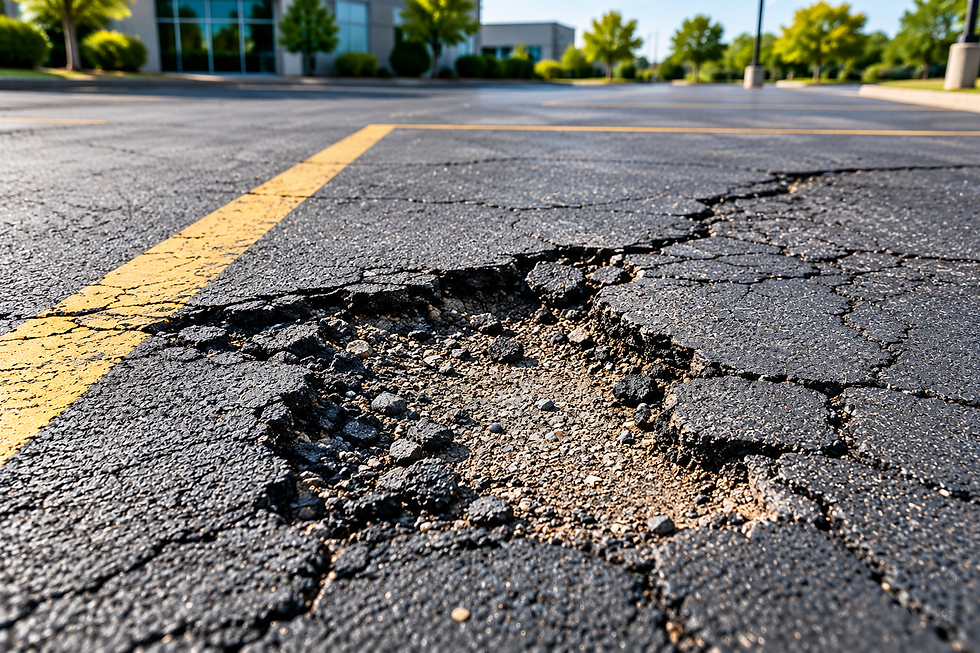
The visible hole may be only part of the damage.
A New Patch Can Fail for an Old Reason
A pothole can return when the repair does not address the conditions that caused the pavement to fail. Water, weak support, traffic demands or damaged material left around the repair can all play a role.
That does not mean every failed patch needs a full parking lot replacement. It means the next repair should begin with a closer look at the area and its history.
Water May Be Reaching the Supporting Layers
Cracks and broken edges can give water a path into pavement. If support beneath the surface weakens, the asphalt above it may continue to deteriorate under traffic.
Look for standing water, nearby runoff or damage that becomes worse after wet weather. Photos can help show the pattern when the contractor visits on a dry day.
The answer may involve drainage or grading as well as a patch. Adding material to the hole alone does not necessarily remove the water problem.
The Failed Area May Be Larger Than the Opening
A small visible hole can sit within a wider area of cracked or weakened asphalt. If the repair stops at the hole's edge while surrounding failure remains, the patched area may break down again.
The repair boundaries should follow the condition of the pavement. This is why a proposed repair can be larger than the part you first noticed.
Ask the contractor to explain the boundaries and whether the work includes removal of failed material.
The Base May Need Attention
Asphalt relies on the material beneath it for support. A surface patch cannot fully address a weak or moving base.
Where failure extends below the top layer, removal and rebuilding may be appropriate. That is a different scope from filling a shallow surface defect, and the estimate should make the distinction clear.
Traffic Can Reveal a Mismatch
Areas where trucks turn, stop or repeatedly follow the same path can experience different demands from ordinary parking spaces. A repair that ignores those demands may not address the reason the area keeps failing.
Tell the contractor how the site is used. Include deliveries, refuse collection and heavier vehicles even if they are not present during the inspection.
Temporary and Longer Term Repairs Have Different Jobs
Sometimes an owner needs an immediate patch while planning a larger project. That can be a deliberate choice, but its purpose should be understood.
A temporary measure should not be mistaken for rebuilding failed pavement. Ask what the proposed repair is intended to achieve and what conditions will remain afterward.
What to Record Before the Next Estimate
Where the pothole returns and how far the surrounding cracking extends.
Dates or approximate timing of prior repairs.
Whether water collects nearby.
The vehicles and turning movements using the area.
Photos showing the repair before and after it failed.
This information helps the conversation move beyond “fill the same hole again.”
Repair One Area or Reconsider the Lot?
If the surrounding pavement is usable, localized asphalt repair may be appropriate. If similar failures are appearing across the property, compare broader options in our repair, overlay or replacement guide.
Sealcoating should come after necessary repairs. It cannot replace the asphalt or support missing beneath a recurring pothole.
Get the Next Repair Clearly Defined
Tri County Asphalt serves Central Valley driveways, parking lots and access areas. Send photos and the address, and tell us how often the problem returns. We will discuss the repair needed for a free estimate.


Comments